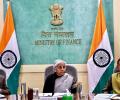
The Budget assumes significance as it comes on the back of lower-than-expected growth numbers during the second quarter and geopolitical uncertainty.

Following the lacklustre growth numbers in the second quarter (Q2FY25), economists believe the upcoming Union Budget for 2025-26 should focus on reforms that will stimulate consumption, manufacturing and spur employment. India's growth unexpectedly slowed to 5.4 per cent in the second quarter, due to low capital formation, weak consumption, besides adverse weather impact.

The government's capital expenditure in the April-November period of financial year 2024-25 (FY25) continued to contract with a 12.3 per cent decline year-on-year (Y-o-Y), according to data released by the Controller General of Accounts on Tuesday.

'Regulatory challenges exist everywhere. What we look for is regulatory stability over time.'

Amid the political blame game over Bengal's potato ban, which led to shortages in Jharkhand and Odisha, Uttar Pradesh farmers are the unlikely winners.

Taxing capital less may not lead to more investments but taxing more will drive capital away, Chief Economic Advisor V Anantha Nageswaran on Friday said during a discussion on Inequality, Economic Growth and Inclusion. While it is easy to drive capital out, bringing it back is a lot harder, said Nageswaran.

The need for a manufacturing policy, reining in food inflation and raising investment in the country were among key suggestions given by economists who met Finance Minister Nirmala Sitharaman and senior ministry officials in the first round of pre-Budget consultations on Friday.

'Not paying workers enough will end up being self-destructive or harmful for the corporate sector itself.'

The cold wave days in December too are expected to be 'below-normal' this year.

Latest GDP growth numbers a one-off development and not the beginning of a trend, says CEA V Anantha Nageswaran.

Prospects of a bumper kharif harvest are expected to lower food inflation in the coming months, making the country's inflation outlook benign, the Union Ministry of Finance (FinMin) said in its monthly economic report for October released on Monday.

As the Union government explores ways to restrict import of laptops and other electronic devices starting with a 5 per cent reduction from the current level, it is working to ensure that there's no supply disruption in India even if an import cap is introduced, it is learnt. The caveat assumes significance in the context of the government's announcement of its plan in August 2023 to issue licences for import of select IT hardware products to reduce the country's dependence on China.

Indications are that the Tata Sons stand on listing of the company may come up for a discussion even if it's not part of the agenda

A fresh survey to identify a minimum of eight million new beneficiaries of the flagship rural housing scheme, in addition to the 12 million already identified, will use the latest face-recognition tools to minimise gaps, a senior official said on Tuesday. The survey, which has already started across the country for building the fresh 20 million new rural houses over the next five years, can also be done by the beneficiary himself/herself as well through the Awaassoft mobile application specially created for this purpose.

States are on track of fiscal consolidation with their total borrowings reaching Rs 5 trillion till October, which is 60 per cent of the projected borrowings of Rs 8.38 trillion till December 2024, according to data from official sources. Government officials said the lower-than-projected borrowings by states were a sign of prudent fiscal management by them. States announce their borrowing plans every quarter.

Reliance Jio, the telecom business of the Mukesh Ambani-promoted conglomerate, is expected to go for an initial public offering (IPO) of over $6.25 billion either in the second or the third quarter of the calendar year 2025, sources said. Reliance Retail is likely to be listed around the same time with a short gap, it is learnt. The timing of the two IPOs, however, will depend on the company's assessment of the market conditions among other factors.

Days before Diwali, the monthly economic review by the finance ministry has highlighted moderation in urban demand, softening consumer sentiments and limited footfall as areas that need to be watched. In its review, released on Monday, the ministry also noted the early signs of artificial intelligence displacing workers, as described in anecdotal reports. The commentary from several large consumer goods companies, including Nestl India, Hindustan Unilever, and ITC, in their recent quarterly earnings, has been around a sluggish urban demand. Rural consumption, however, has mostly seen a revival, the companies pointed out.
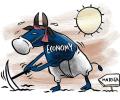
Fewer people participated in MGNREGA during the first six months of this financial year (April-September) compared to the same period last year, a recent analysis of the scheme's performance by LibTech showed.

Tomato prices have been on the boil for more than a month. Data from major cities show that the spike has been between 125 and 150 per cent at the wholesale level. Soaring vegetable prices, including tomatoes, pushed the retail inflation rate to a nine-month high of 5.49 per cent in September, according to government data. Though reports say prices are expected to come down in the next few weeks after supplies improve from Madhya Pradesh and Himachal Pradesh, how long will the respite last is anybody's guess.
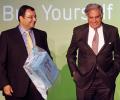
Ratan Tata: A Life, the much awaited biography, reveals that after a year of 'parallel running', Tata began having second thoughts about Cyrus Mistry's 'suitability'. 'Mistry targeted Ratan, the man who had elevated him from virtual oblivion into the mainstream of the Tatas...'
 © 2025 Rediff.com - Investor Information - Advertise with us - Disclaimer - Privacy Policy - Sitemap - Feedback - About us - Terms of use - Grievances